往年
How to Understand
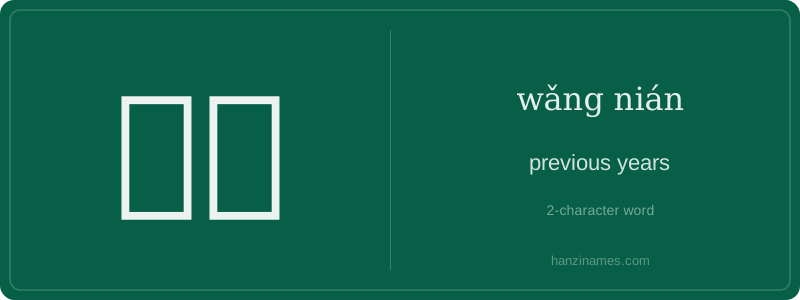
往年 refers to the past years, typically used to compare with the present or to describe events that occurred in previous times. It emphasizes the contrast between past and present conditions or experiences.
The character 往 (wǎng) means 'past' or 'to go back,' while 年 (nián) means 'year.' Together, they form a compound noun that literally translates to 'previous years,' capturing the idea of time that has already passed.
往年 is commonly used in contexts like weather patterns, economic conditions, or personal experiences. For example, people might say, '往年这个时候天气更冷' (Wǎng nián zhè ge shíhou tiānqì gèng lěng), meaning 'The weather was colder this time last year.' It is also used in historical or comparative discussions to highlight changes over time.