泡沫
How to Understand
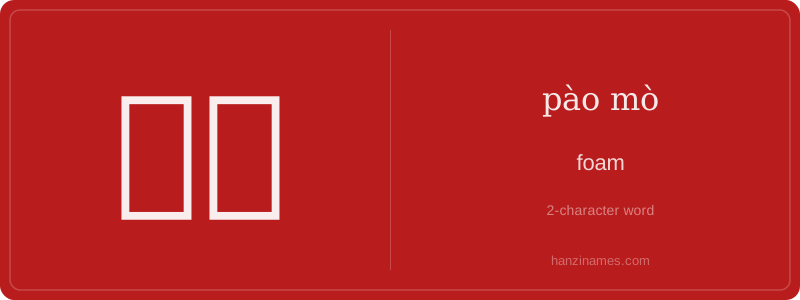
泡沫 (pào mò) literally translates to 'foam' and refers to the bubbly substance formed when air is trapped in a liquid, such as when you pour a drink or wash something. It can also be used metaphorically to describe something insubstantial or fleeting.
The character 泡 (pào) means 'bubble' or 'foam,' while 沫 (mò) means 'froth' or 'foam.' Together, they form a compound that emphasizes the visual and physical nature of foam. The word has roots in classical Chinese, where it was often used to describe natural phenomena like water or milk foam.
泡沫 is commonly used in everyday language, especially in contexts involving liquids, cleaning, or even abstract ideas. For example, people might say something is "像泡沫一样短暂" (like foam, fleeting) to describe something temporary. It's also used in products like bubble bath or shampoo, where foam is an important feature.