不同
How to Understand
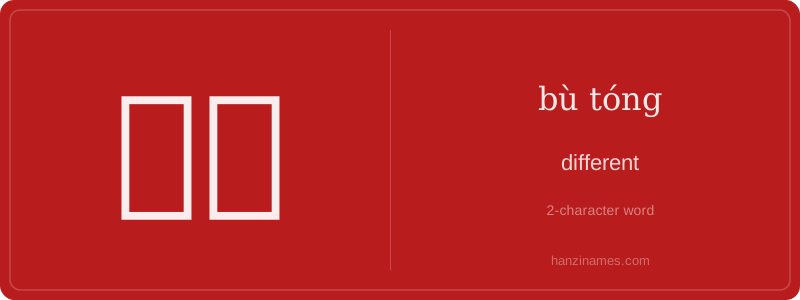
不同 (bù tóng) means 'different' or 'not the same' in English. It is used to describe distinctions between people, things, ideas, or situations. Unlike similar words like 'distinct,' which can imply a stronger separation, 不同 often refers to noticeable but not necessarily extreme differences.
The character 不 (bù) means 'not,' and 同 (tóng) means 'same.' Together, they form a negation of sameness, emphasizing contrast or variation. This structure is common in Chinese for expressing opposition or diversity.
不同 is widely used in daily conversations and writing. For example, it can be used to compare opinions, describe unique characteristics, or highlight individuality. It appears in phrases like 不同的风格 (different styles) or 不同的观点 (different viewpoints). Understanding 不同 helps learners grasp how Chinese expresses variety and distinction in language and culture.