不会
How to Understand
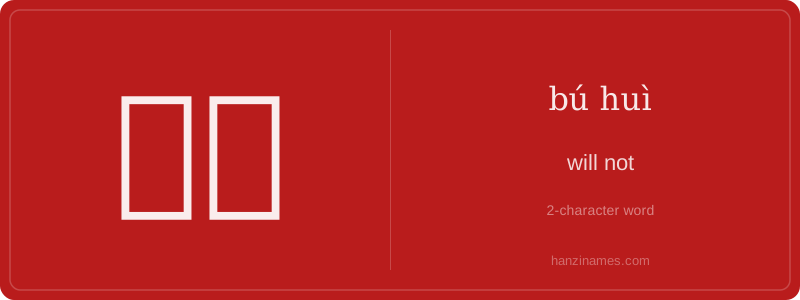
不会 (bú huì) is an adverb meaning 'will not' or 'cannot,' used to express inability, refusal, or negation of a future action. It differs from other negative expressions like 不是 (bù shì) or 没有 (méi yǒu) by focusing on the lack of ability or intention rather than factual truth or possession.
The character 不 (bù) means 'not,' and 会 (huì) originally meant 'to meet' or 'to be able to.' Over time, 会 has evolved to mean 'to know how to' or 'to be capable of,' so 不会 combines these to mean 'will not' or 'cannot.'
不会 is commonly used in everyday conversations to express refusal, inability, or surprise. For example, it can be used when someone says they don't know how to do something or when expressing that something won't happen. It's also used in polite refusals or to show uncertainty about future events.