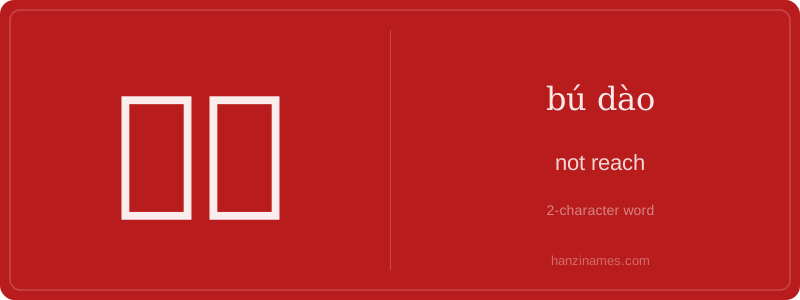
不到
How to Say
👀 0
How to Write
Meaning: not reach
How to Understand
不到
不到 (bù dào) means 'not reach' or 'not arrive.' It is commonly used to describe the failure to achieve a goal, arrive at a place, or meet a standard. It can also imply that something is not sufficient or inadequate.
The character 不 (bù) means 'not,' and 到 (dào) means 'to reach' or 'to arrive.' Together, they form a negative expression indicating the absence of reaching a destination or achieving a result.
不到 is often used in daily conversation to express that something hasn't been achieved or that someone hasn't arrived. It appears in phrases like 不到一年 (bù dào yī nián, not a year) or 不到一半 (bù dào yībàn, less than half). Understanding this phrase helps learners grasp the nuance of negation in Chinese action verbs.
Example Sentences
他到不了北京。
He can't reach Beijing.
这个价格不到一千元。
This price is less than one thousand yuan.