实施
How to Understand
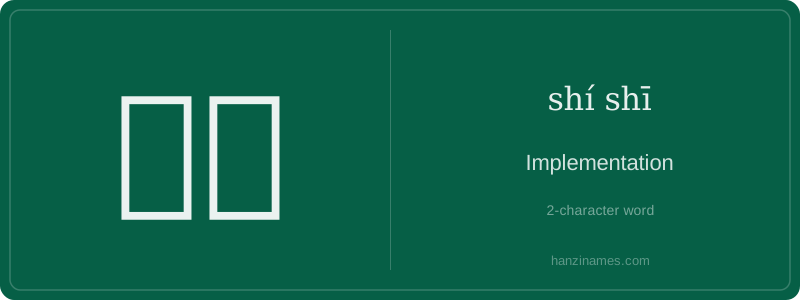
实施 means 'implementation' or 'execution' in English. It refers to the act of putting a plan, policy, or idea into action. Unlike simply 'carrying out,' it emphasizes the systematic and deliberate application of something that has been decided upon.
The character 实 (shí) originally meant 'substance' or 'reality,' and later came to signify 'truth' or 'fact.' 施 (shī) was an archaic form of 'to bestow' or 'to apply.' Together, 实施 conveys the idea of applying something tangible and real.
实施 is commonly used in formal or official contexts, such as government policies, business strategies, or legal procedures. It often appears in discussions about how plans are carried out in practice, rather than just in theory. In daily life, it might be used when talking about the execution of a project or the enforcement of a rule.