普通
How to Say
👀 0
How to Write
Meaning: ordinary
How to Understand
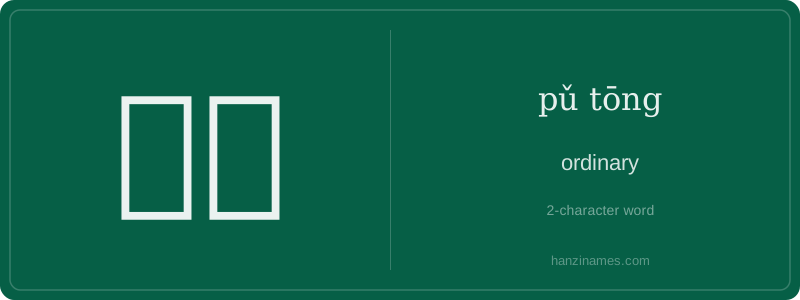
普通
普通 (pǔ tōng) means 'ordinary' or 'common' in English. It describes something that is not special, unusual, or exceptional. It differs from words like 'normal' or 'usual' by emphasizing a lack of uniqueness rather than just a typical state.
The character 普 (pǔ) originally meant 'universal' or 'general,' and 通 (tōng) means 'to pass through' or 'to be common.' Together, they convey the idea of something widely encountered or not distinctive.
普通 is commonly used in daily conversations to describe things like jobs, people, or situations that are not remarkable. For example, a 普通员工 (pǔ tōng yuán gōng) is an ordinary employee. It's also used in phrases like 普通人 (pǔ tōng rén), meaning 'ordinary person.'
Example Sentences
他只是个普通学生,没有特别的才能。
He is just an ordinary student with no special talents.
这家餐厅提供普通的中餐,价格实惠。
This restaurant offers ordinary Chinese food at affordable prices.