不得
How to Understand
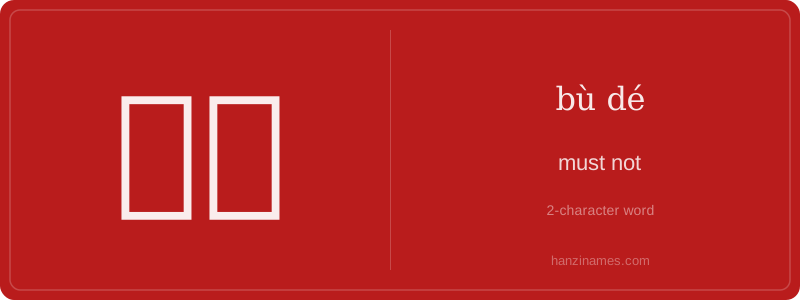
不 (bù) means 'not,' and 得 (dé) is a function word used to form prohibitions or restrictions. Together, 不得 (bù dé) translates to 'must not' or 'are not allowed.' It is often used in formal or imperative contexts to express prohibition or restriction.
The character 不 (bù) comes from the ancient Chinese character for 'not,' while 得 (dé) originally meant 'to obtain' or 'to get.' Over time, it evolved into a grammatical particle used with 不 to create negative imperatives. This structure is common in modern Mandarin for expressing rules or regulations.
不得 is frequently used in official documents, signs, and legal texts. For example, it appears on warning signs or in instructions. It is also used in daily conversations when giving commands or setting boundaries. Understanding this phrase helps learners grasp how prohibitions are expressed in Chinese.