面对
How to Say
👀 0
How to Write
Meaning: face
How to Understand
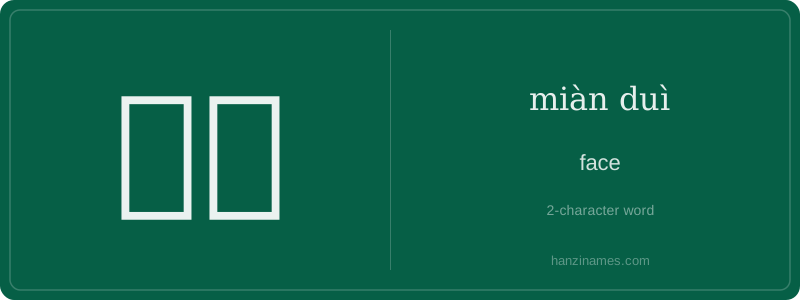
面对
面对 means 'to face' or 'to confront,' often used in the context of dealing with a situation, person, or challenge directly. It implies a proactive stance rather than avoidance.
The character 面 (miàn) originally meant 'face' and later extended to 'aspect' or 'direction.' 对 (duì) means 'opposite' or 'correct.' Together, they convey the idea of confronting something head-on or being directly involved with a situation.
面对 is commonly used in both formal and informal contexts, such as facing difficulties, challenges, or even personal emotions. It is often paired with verbs like 应对 (yìng duì, to cope with) or 处理 (chǔ lǐ, to handle). In Chinese culture, facing problems directly is seen as a sign of strength and responsibility.
Example Sentences
他必须面对自己的错误。
He must face his mistakes.
我们面对的是一个难以置信的挑战。
We are facing an incredible challenge.