合理
How to Understand
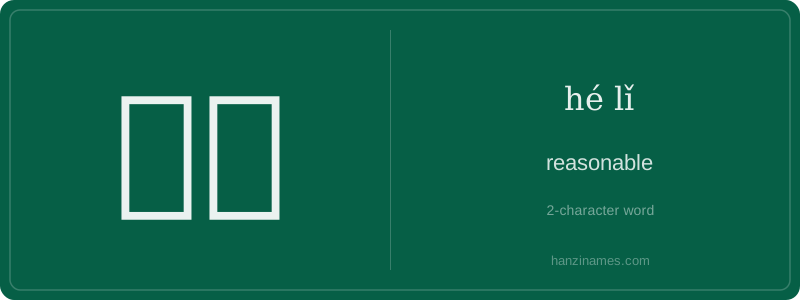
合理 means 'reasonable' or 'justifiable,' describing something that is fair, logical, or in line with common sense. It emphasizes the balance between what is expected and what is actually done, often implying that a situation or action is appropriate and well-founded.
The character 合 (hé) originally meant 'to fit together' or 'to combine,' while 理 (lǐ) means 'principle' or 'order.' Together, they suggest something that is in harmony with established norms or logic, making the term deeply rooted in Confucian ideals of balance and rationality.
合理 is commonly used in everyday speech to describe decisions, behaviors, or situations that are seen as fair or just. It appears in contexts such as negotiations, complaints, and explanations, where someone is trying to justify their actions or evaluate another's behavior. In Chinese culture, maintaining harmony and rationality is highly valued, which makes 合理 an important concept in both personal and professional settings.