整体
How to Say
👀 0
How to Write
Meaning: overall
How to Understand
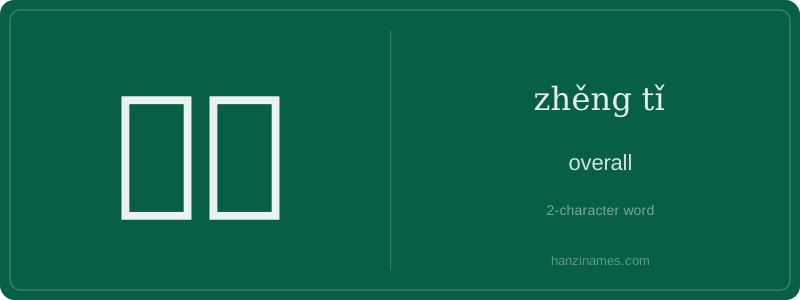
整体
整体 refers to the whole or the entirety of something, emphasizing a comprehensive or unified perspective. It is often used to describe a complete picture or a holistic approach, as opposed to individual parts.
The character 整 (zhěng) means 'whole' or 'entire,' and 体 (tǐ) means 'body' or 'form.' Together, they convey the idea of a complete entity or a unified structure, often used in contexts like design, strategy, or analysis.
整体 is commonly used in both formal and informal settings, such as discussing business strategies, artistic works, or personal development. In Chinese culture, the concept of 整体 reflects a holistic way of thinking, valuing balance and harmony over isolated components.
Example Sentences
这个项目需要从整体考虑,不能只看局部。
This project needs to be considered from an overall perspective, not just the details.
他设计的方案注重整体美观,而不是个别细节。
His design plan focuses on overall aesthetics rather than individual details.