人体
How to Say
👀 0
How to Write
Meaning: human body
How to Understand
人体
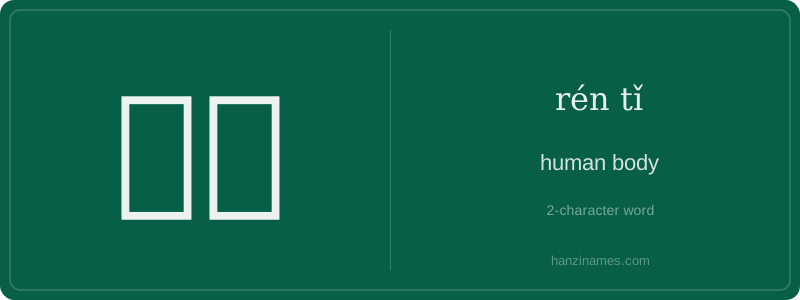
人体 refers to the physical structure of a human being, encompassing all parts and systems of the body. It is often used in medical, scientific, or educational contexts to discuss anatomy, health, or physiology.
The character 人 (rén) means 'person' or 'human,' while 体 (tǐ) means 'body' or 'structure.' Together, they form a term that directly translates to 'human body,' emphasizing the physical aspect of a person.
人体 is commonly used in textbooks, medical discussions, and health-related content. Understanding this term is essential for learners studying biology, medicine, or fitness. It is also used in phrases like 人体工学 (rén tǐ gōng xué), meaning 'ergonomics,' which relates to designing tools and environments for human use.
Example Sentences
医生正在研究人体结构。
The doctor is studying the human body structure.
运动员需要了解人体力学来提高表现。
Athletes need to understand human mechanics to improve performance.