华北
How to Understand
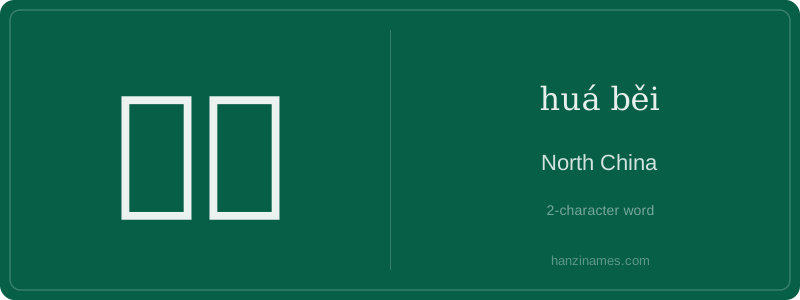
华北 refers to the northern region of China, typically encompassing provinces such as Beijing, Tianjin, Hebei, Shanxi, and Inner Mongolia. It is a geographical and administrative term often used in political, historical, and cultural contexts.
The character 华 (huà) means 'splendor' or 'glory,' and is often associated with Chinese civilization. 北 (běi) means 'north.' Together, 华北 literally translates to 'Northern Splendor,' reflecting the historical and cultural significance of this region in Chinese history.
华北 is commonly used in official documents, news reports, and academic discussions. It is also relevant in understanding regional differences in language, culture, and economy within China. Learners should note that it is distinct from other regional terms like 华东 (east China) or 华南 (south China).