当前
How to Understand
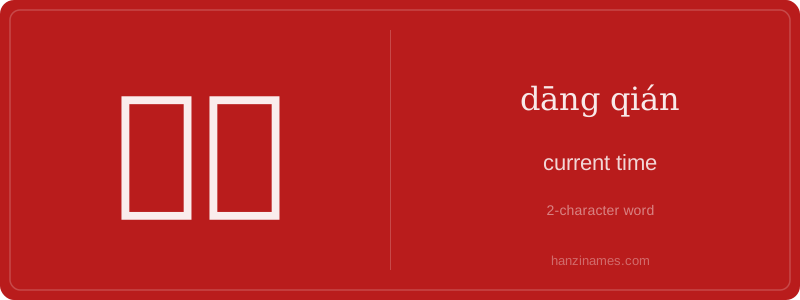
当前 means 'current' or 'present,' often used to refer to the present moment or situation. It emphasizes the immediate, ongoing state of something rather than past or future conditions.
The character 当 (dāng) originally meant 'to be in charge of' or 'to correspond to,' and it later came to mean 'current' or 'present.' The character 前 (qián) means 'before' or 'in front,' and when combined with 当, it forms a term that denotes the present or current time.
当前 is commonly used in both formal and informal contexts to describe the present situation, such as in news reports, business discussions, or daily conversations. It can also appear in phrases like 当前形势 (dāng qián xíngshì), meaning 'current situation,' or 当前问题 (dāng qián wèntí), meaning 'current issue.'