上年
How to Say
👀 0
How to Write
Meaning: previous year
How to Understand
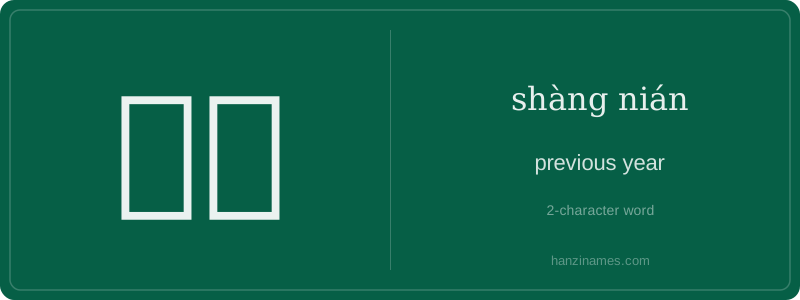
上年
上年 refers to the year that has just passed, typically used to describe events or conditions from the previous year. It is often used in contrast to the current year or the following year.
The character 上 (shàng) means 'above' or 'previous,' and 年 (nián) means 'year.' Together, they form a term that specifically denotes the year before the current one, emphasizing its temporal relationship to the present.
In daily conversation, 上年 is commonly used in contexts such as financial reports, historical comparisons, or personal reflections. For example, someone might say, 'Last year's sales were higher than this year's,' using 上年 to refer to the prior period. It is also found in formal documents and media to discuss past performance or trends.
Example Sentences
去年的销售额比上年增加了10%。
The sales last year increased by 10% compared to the previous year.
他上年在这家公司工作了两年。
He worked at this company for two years last year.