年轻人
How to Understand
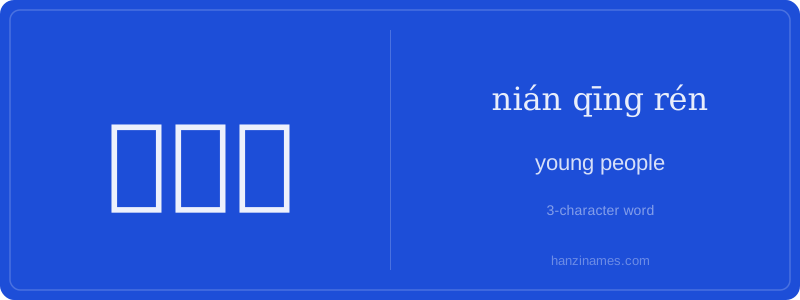
年轻人 refers to young people, typically those in their teens, twenties, or early thirties. It is a general term for individuals who are not yet considered adults in terms of social or professional roles, and it often carries connotations of energy, idealism, and potential.
The character 年 (nián) means 'year' or 'age,' 轻 (qīng) means 'light' or 'young,' and 人 (rén) means 'person.' Together, they form a term that literally translates to 'young person' or 'youth.'
年轻人 is widely used in both formal and informal contexts, such as in media, education, and everyday conversation. In Chinese culture, young people are often seen as the future of society, and this term reflects the respect and attention given to them. It can also be used in contrast to older generations, highlighting differences in values or experiences.