不安
How to Understand
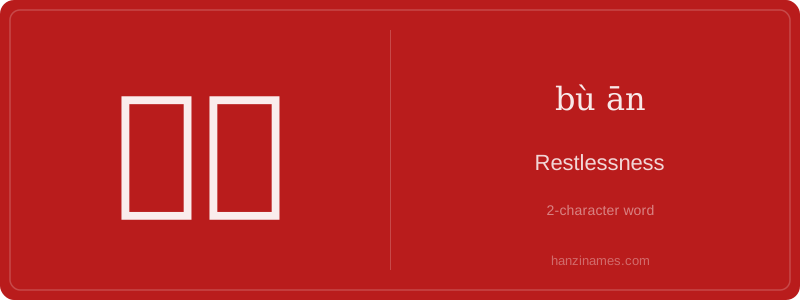
不安 refers to a state of mental unease or anxiety. It describes an inner feeling of discomfort, uncertainty, or fear that may not have a clear cause. Unlike simple worry, 不安 often implies a deeper, more persistent sense of instability or insecurity.
The character 不 (bù) means 'not' or 'without,' while 安 (ān) means 'peace' or 'comfort.' Together, they form a compound that literally translates to 'not peaceful' or 'uncomfortable,' capturing the essence of inner turmoil or lack of tranquility.
不安 is commonly used in both everyday speech and literature to describe emotional states such as nervousness before an important event, uncertainty about the future, or general feelings of unrest. It is often associated with psychological or emotional distress and can be linked to cultural values emphasizing harmony and stability in Chinese society.