日后
How to Say
👀 0
How to Write
Meaning: in the future
How to Understand
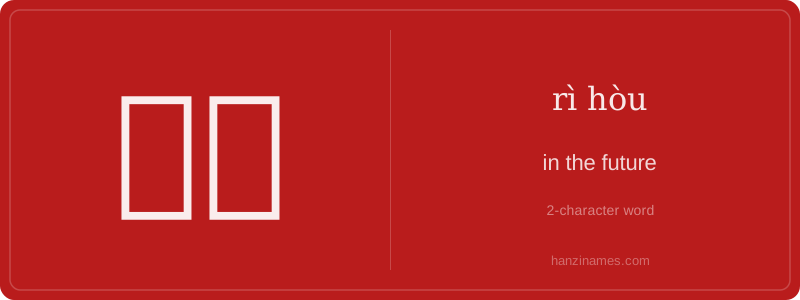
日后
日后 means 'in the future' or 'later on.' It refers to a time after the present, often used to describe events or actions that will happen later.
The character 日 (rì) means 'day' or 'sun,' and 后 (hòu) means 'after' or 'behind.' Together, they form a compound meaning 'after the day,' which evolved into the concept of 'in the future.'
日后 is commonly used in both spoken and written Chinese. It appears in phrases like 日后见 (rì hòu jiàn), meaning 'see you later,' or 日后有机会 (rì hòu yǒu jī huì), meaning 'in the future, there will be an opportunity.' It's also used in formal contexts, such as legal or business documents, to indicate future actions or conditions.
Example Sentences
我们日后会再见的。
We will meet again in the future.
日后如果需要帮助,请随时联系我。
If you need help in the future, please contact me anytime.