无线电
How to Understand
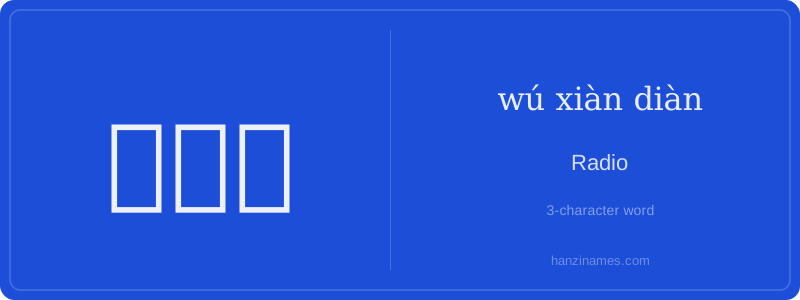
无线电 (wú xiàn diàn) refers to radio, specifically the transmission and reception of signals through electromagnetic waves without the use of physical wires. It is commonly used in the context of broadcasting, communication, and electronic devices.
The character 无 (wú) means 'without,' 线 (xiàn) means 'wire' or 'line,' and 电 (diàn) means 'electricity' or 'electric.' Together, they literally translate to 'wireless electricity,' reflecting the concept of transmitting electrical signals without physical connections.
无线电 is widely used in daily life, such as in radio stations, emergency communication systems, and even in modern technology like Wi-Fi and Bluetooth. In Chinese culture, it has historical significance related to early communication and broadcasting, and it remains an essential part of both technological and cultural development.