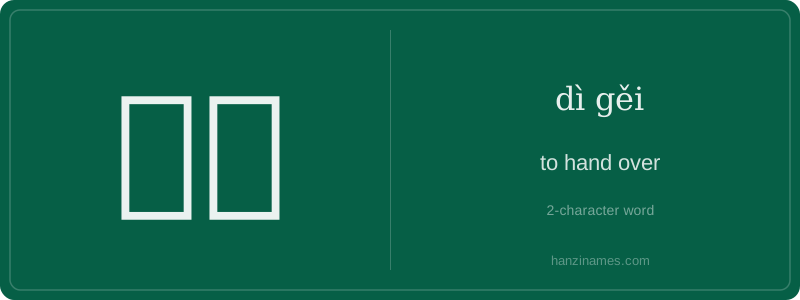
递给
How to Say
👀 0
How to Write
Meaning: to hand over
How to Understand
递给
递给 means 'to hand over' or 'to give to someone.' It emphasizes the physical act of passing something from one person to another, often with a sense of direct transfer.
The character 递 (dì) originally meant 'to deliver' or 'to pass along,' while 给 (gěi) means 'to give.' Together, they form a compound verb that specifically refers to handing something to someone directly, as opposed to just giving it in a general sense.
This phrase is commonly used in daily conversations when someone is passing an object, document, or message. It reflects the importance of politeness and clarity in Chinese communication, where actions are often expressed with precision and respect for the recipient.
Example Sentences
他把书递给我。
He handed me the book.
服务员把菜单递给了顾客。
The waiter handed the menu to the customer.