撤退
How to Understand
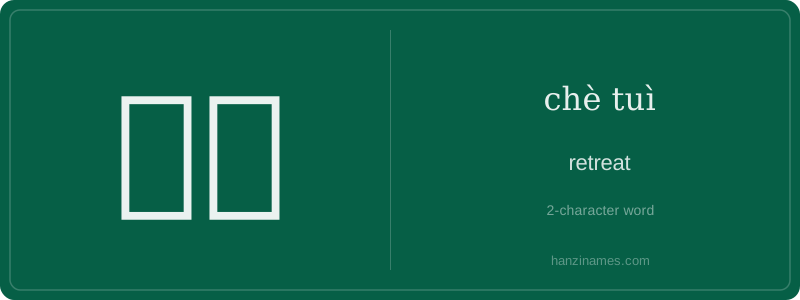
撤退 (chè tuì) refers to the act of withdrawing or retreating, typically from a position, battle, or situation. It is often used in military or strategic contexts but can also apply to more general situations where someone or something moves back.
The character 撤 (chè) means 'to withdraw' or 'to revoke,' and 退 (tuì) means 'to step back' or 'to retreat.' Together, they form a compound that emphasizes the deliberate movement away from a point of engagement or conflict.
In Chinese culture, 撤退 is commonly associated with military strategy and discipline. It may appear in historical texts, news reports, or tactical discussions. Understanding this term helps learners grasp how Chinese speakers describe movements away from danger or conflict in both formal and informal contexts.