春季
How to Say
👀 0
How to Write
Meaning: Spring season
How to Understand
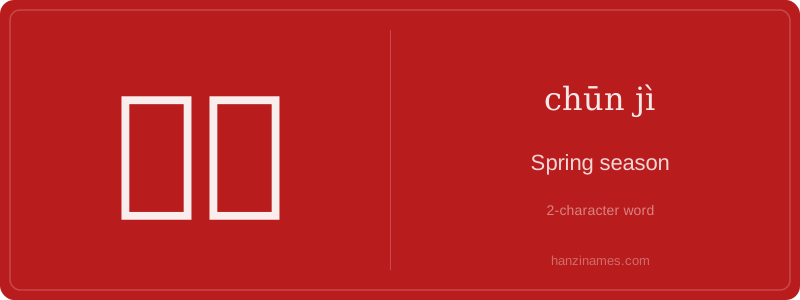
春季
春 (chūn) means 'spring' and 季 (jì) means 'season.' Together, 春季 (chūn jì) refers to the season of spring, characterized by warmer weather, blooming flowers, and the awakening of nature after winter.
The character 春 combines 日 (sun) and 屯 (to gather or sprout), symbolizing the sun's return and the sprouting of life. 季 originally meant 'a period' or 'season,' and it is also used in words like 秋季 (autumn) and 冬季 (winter).
春 is often associated with renewal and growth in Chinese culture. 春季 is commonly used in calendars, weather reports, and seasonal expressions like 春暖花開 (spring warmth and blooming flowers). It is also used in idioms and poetry to evoke feelings of hope and vitality.
Example Sentences
春季是鳥類遷徙的季節。
Spring is the season when birds migrate.
我們計劃在春季去郊遊。
We plan to go on an outing during spring.