定居
How to Say
👀 0
How to Write
Meaning: settle down
How to Understand
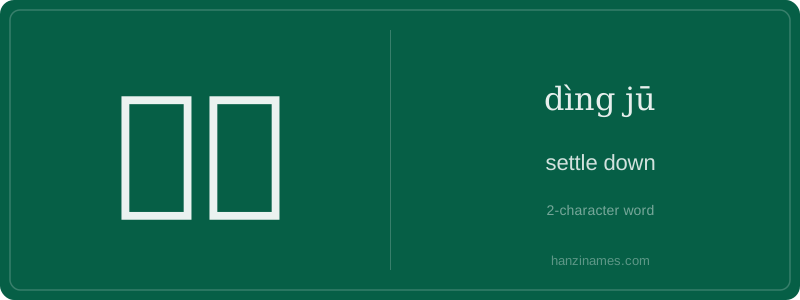
定居
定居 means 'to settle down' or 'establish a permanent home.' It refers to the act of moving to a place and making it one's permanent residence, often involving a long-term commitment to a location.
The character 定 (dìng) means 'fixed' or 'determine,' while 居 (jū) means 'to live' or 'reside.' Together, they convey the idea of establishing a fixed place of living, implying stability and permanence.
定居 is commonly used in contexts related to migration, immigration, or personal life decisions. It is often associated with cultural adaptation, as people who settle down in a new country may need to integrate into local customs and communities. In Chinese society, settling down is often seen as a sign of maturity and responsibility.
Example Sentences
他决定在杭州定居,因为那里有美丽的风景和温暖的气候。
He decided to settle down in Hangzhou because of its beautiful scenery and warm climate.
她从美国回到中国后,选择在成都定居。
After returning from the United States, she chose to settle down in Chengdu.