不对
How to Understand
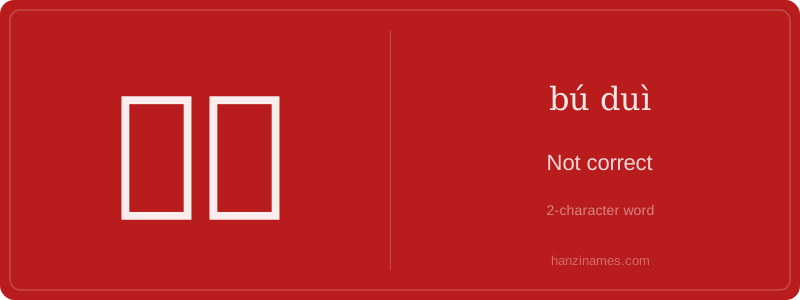
不对 (bù duì) means 'not correct' or 'not right.' It is commonly used to indicate that something is inaccurate, incorrect, or not in line with expectations. Unlike similar expressions like 错了 (cuò le), which often implies a mistake, 不对 can also suggest a discrepancy or a deviation from the norm.
The character 不 (bù) means 'not,' and 对 (duì) means 'correct' or 'right.' Together, they form a negation of correctness, making 不对 a straightforward way to express disagreement or error.
不对 is frequently used in everyday conversations to correct someone, challenge an idea, or express doubt. It can be neutral or slightly negative depending on context. For example, it might be used in a classroom setting to point out a wrong answer or in a debate to question an argument. It's also common in informal settings when someone questions another person's statement or action.