不当
How to Say
👀 0
How to Write
Meaning: improper
How to Understand
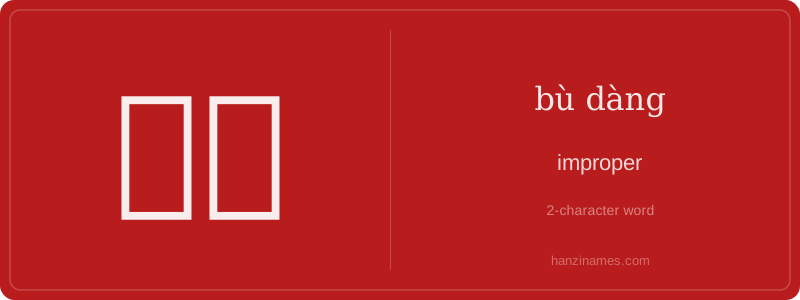
不当
不当 means 'improper' or 'inappropriate,' often used to describe actions, behavior, or statements that are not suitable or acceptable in a given context.
The character 不 (bù) means 'not,' and 当 (dāng) means 'appropriate' or 'suitable.' Together, 不当 literally translates to 'not appropriate,' emphasizing the lack of correctness or propriety in a situation.
It is commonly used in formal and informal settings to point out something that is wrong or not in line with social norms. In Chinese culture, maintaining harmony and respect is important, so 不当 can be used to politely correct someone's behavior or speech without being overly harsh.
Example Sentences
他的行为很不当,应该向大家道歉。
His behavior was improper and he should apologize to everyone.
这个提议是不正当的,我们不能接受。
This proposal is improper, and we cannot accept it.