排斥
How to Understand
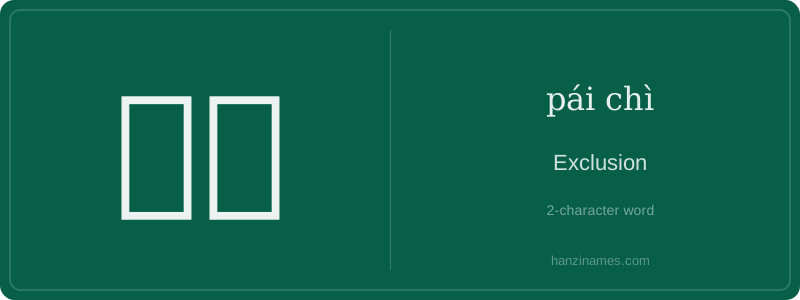
排斥 (pái chì) refers to the act of excluding or rejecting someone or something, often due to prejudice, bias, or differences in opinion. It is commonly used in social, political, and interpersonal contexts to describe the process of keeping someone out of a group or system.
The character 排 (pái) means 'to push away' or 'to arrange,' while 斥 (chì) means 'to rebuke' or 'to expel.' Together, they form a compound that conveys the idea of actively pushing someone away or refusing to accept them.
排斥 is often seen in discussions about social integration, workplace dynamics, and political policies. It can carry strong emotional connotations, especially when it involves discrimination or marginalization. Understanding this term helps learners grasp how Chinese society perceives inclusion and exclusion in various settings.