洼地
How to Say
👀 0
How to Write
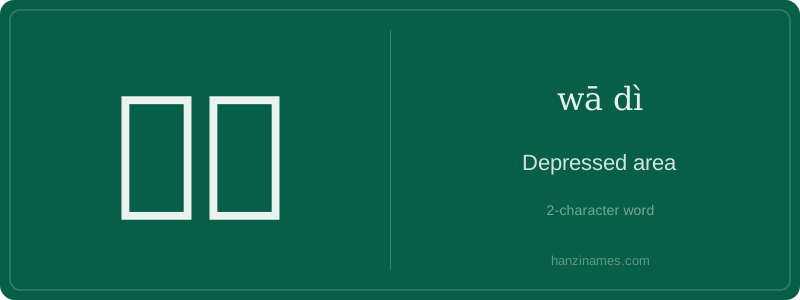
Meaning: Depressed area
How to Understand
洼地
洼地 (wā dì) refers to a low-lying or sunken area of land, typically formed by natural processes such as erosion or tectonic activity. It is often used to describe a geographical feature that is lower than the surrounding terrain.
The character 洼 (wā) means 'sunken' or 'depressed,' and 地 (dì) means 'ground' or 'land.' Together, they form a term that literally translates to 'sunken land,' emphasizing the physical characteristic of the area.
In daily use, 洼地 can appear in geographical descriptions, environmental discussions, or even metaphorical expressions. It is commonly found in texts related to geology, agriculture, and landscape analysis. Understanding this term helps in interpreting maps and natural land formations.
Example Sentences
这片土地是一个天然的洼地,经常积水。
This land is a natural depression that often accumulates water.
他们在洼地里种了一些耐涝的作物。
They planted some water-tolerant crops in the depressed area.