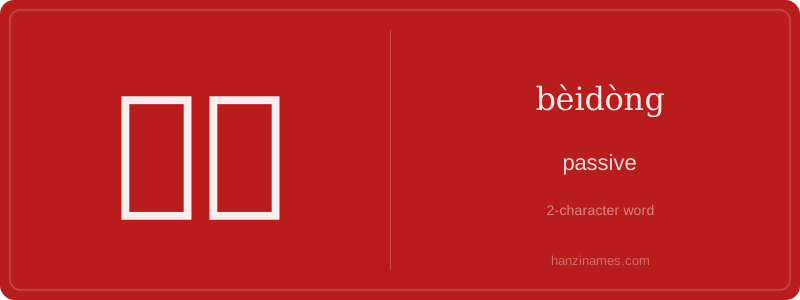
被动
How to Say
👀 0
How to Write
Meaning: passive
How to Understand
被动
被动 means 'passive' or 'involuntary,' describing a state of being affected by external forces without active participation. It contrasts with 'active,' where someone takes initiative or control.
The character 被 (bèi) originally meant 'to be subjected to,' and 动 (dòng) means 'to move' or 'to act.' Together, they convey the idea of being moved or acted upon by external factors rather than initiating action oneself.
被动 is commonly used in contexts like relationships, decisions, and situations where one feels controlled or influenced. It appears in phrases like 被动接受 (bèidòng jiēshòu), meaning 'to passively accept.' Understanding this term helps grasp nuances in Chinese communication about agency and influence.
Example Sentences
他总是处于被动的位置,无法掌控局面。
He is always in a passive position, unable to control the situation.
这种策略是被动的,没有主动出击。
This strategy is passive, without taking the initiative.