呼吸
How to Understand
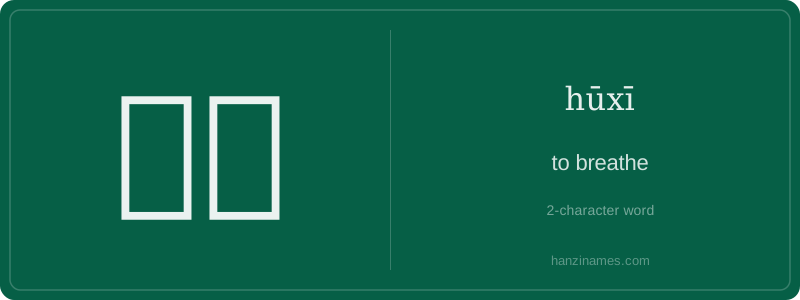
呼吸 (hūxī) means 'to breathe' in English. It refers to the physiological process of taking air into and expelling it from the lungs, essential for sustaining life. Unlike related terms like 呼吸作用 (hūxī zuòyòng), which means 'respiration,' 呼吸 is more commonly used in everyday language to describe the act of breathing itself.
The character 呼 (hū) originally meant 'to call out' or 'to exhale,' while 吸 (xī) meant 'to inhale' or 'to suck in.' Together, they form a compound that literally means 'to exhale and inhale,' representing the full cycle of breathing. This etymology reflects the dual nature of the breath process.
呼吸 is widely used in both medical and general contexts. In Chinese culture, deep breathing is often associated with health and meditation practices, such as qigong and tai chi. It can also be used metaphorically, as in 表达情感时,呼吸会变得急促 (when expressing emotions, breathing becomes rapid), indicating emotional states.