媲美
How to Understand
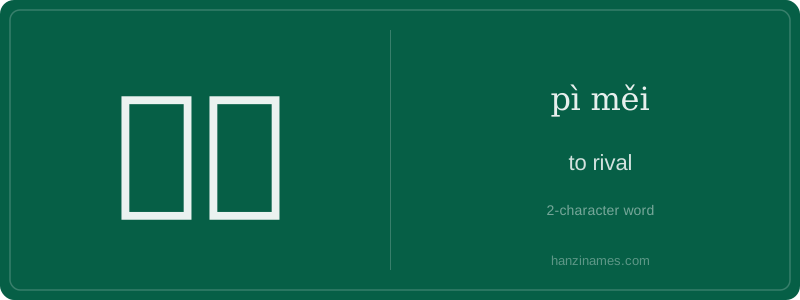
媲美 means 'to rival' or 'to be comparable to.' It is used to describe something that can match or equal another in quality, beauty, or value. Unlike the more classical term 侔 (móu), 媲美 is more commonly used in modern Chinese and emphasizes a direct comparison between two things.
The character 媲 (pì) originally meant 'to match' or 'to rival,' while 美 (měi) means 'beautiful' or 'fine.' Together, they form a compound that conveys the idea of something being beautiful or excellent enough to be comparable to another.
It is often used in contexts such as art, nature, design, or performance, where one thing is said to be on par with another. For example, it might be used to describe a natural landscape that rivals a famous tourist spot, or a piece of artwork that matches the quality of a renowned artist's work.