桎梏
How to Understand
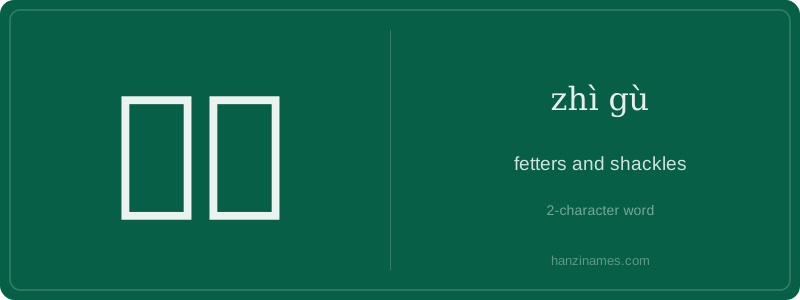
桎梏 refers to physical restraints such as fetters and handcuffs, used to restrict movement. It can also be used metaphorically to describe any form of oppression or restriction, whether physical, mental, or social.
The character 桎 (zhì) originally referred to a wooden frame used to bind a person's arms, while 梏 (gù) referred to a wooden frame for the legs. Together, they formed a compound meaning physical restraints. The word has retained this literal meaning over time, though it is often used figuratively in modern Chinese.
In everyday usage, 桎梏 is commonly found in literature, historical contexts, and discussions about freedom and oppression. It is also used in idioms and metaphors to express being trapped by circumstances or ideas. Understanding its dual literal and figurative meanings helps in grasping deeper cultural and philosophical discussions in Chinese texts.