无论
How to Understand
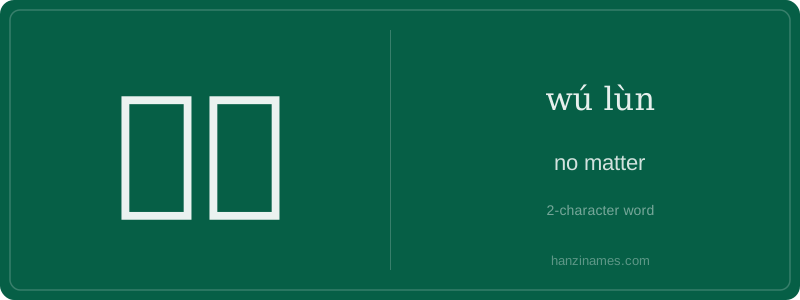
无论 is a conjunction that means 'no matter' or 'regardless of.' It introduces a condition or circumstance that remains true regardless of other factors. It is often used in sentences with the structure '无论...都...' (no matter... will...), indicating that something will happen or be true under any condition.
The character 无 (wú) means 'without' or 'not,' and 论 (lùn) means 'discussion' or 'argument.' Together, they form a phrase that literally translates to 'without discussion,' implying that something is true regardless of debate or consideration. This expression has roots in classical Chinese, where it was used to emphasize certainty or universality.
无论 is commonly used in both formal and informal contexts, especially in conditional statements. It reflects a cultural emphasis on universality and objectivity in reasoning. Learners should practice using it in sentences that express unwavering conditions, such as in promises, rules, or general truths.