地上
How to Say
👀 0
How to Write
Meaning: on the ground
How to Understand
地上
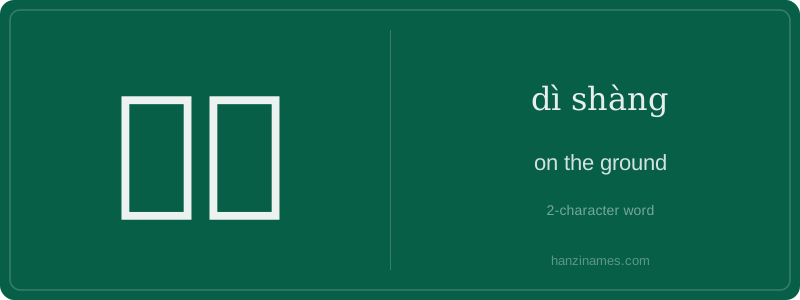
地上 means 'on the ground' or 'above the ground.' It refers to the surface of the earth, as opposed to underground or in the air. It is often used to describe locations, objects, or actions that occur on the surface.
The character 地 (dì) means 'earth' or 'ground,' and 上 (shàng) means 'up' or 'above.' Together, they form a compound meaning 'on the ground' or 'above the ground,' which can also imply a surface level or external area.
地上 is commonly used in daily speech to describe where something is located, such as in a house, park, or street. It is also used in expressions like 地上停车场 (dì shàng tíchē chǎng), meaning 'surface parking lot.' Understanding 地上 helps learners grasp spatial relationships in Chinese contexts.
Example Sentences
书在桌子上。
The book is on the table.
他们在公园的草地上野餐。
They had a picnic on the grass in the park.