不由得
How to Say
👀 0
How to Write
Meaning: cannot help but
How to Understand
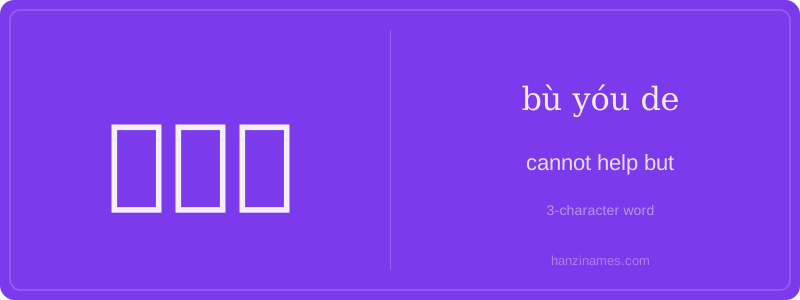
不由得
不 by itself means 'not,' and 由 means 'to be caused by' or 'to be allowed.' The particle 得 is used to indicate possibility or ability. Together, 不由得 expresses an involuntary or uncontrollable reaction, often used to describe emotions or actions that happen without conscious effort.
The character 不 (bù) negates the action, 由 (yóu) implies causation or permission, and 得 (de) indicates a state of being able to do something. Combined, they convey a sense of inevitability or spontaneous reaction.
不 by itself is commonly used in expressions like 不由自主 (bù yóu zì zhǔ), meaning 'without being able to control oneself.' This phrase is often used in literature and daily conversation to express feelings or reactions that are natural and unforced.
Example Sentences
他不由得起身鼓掌。
He couldn't help but stand up and clap.
她不由地笑了出来。
She couldn't help but laugh out loud.