爹爹
How to Understand
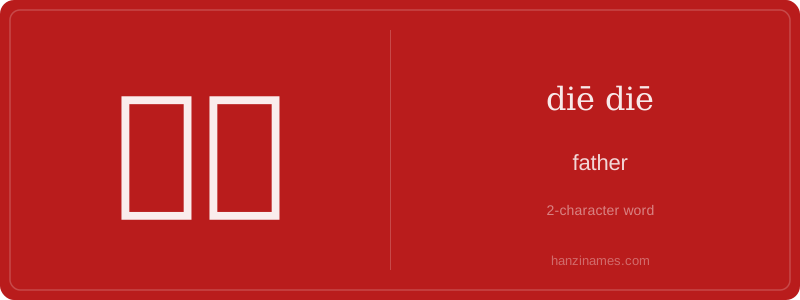
爹爹 is a colloquial term for 'father' in Chinese, often used in northern dialects and informal speech. It carries a more affectionate or endearing tone compared to the standard term 爸爸 (bàba), which is also used for 'father' but is more commonly heard in southern regions.
The character 爹 (diē) originally meant 'father' in classical Chinese and was used in ancient texts. The repetition of the character in 爹爹 emphasizes the relationship and adds a sense of closeness or familiarity. This reduplication is common in Chinese to convey emphasis or intimacy.
While 爹爹 is not as widely used in modern standard Mandarin as 爸爸, it remains an important regional term. It may appear in literature, songs, or family conversations, especially in northern China. Learners should be aware that it may not be understood universally in all Chinese-speaking regions.