地带
How to Understand
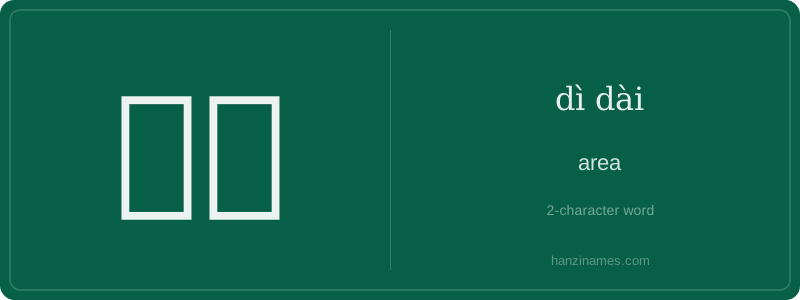
地带 (dìdài) is a noun meaning 'area' or 'region,' often used to describe a specific geographical or conceptual zone. It can refer to a physical location, like a mountainous area, or an abstract concept, such as a cultural or economic zone.
The character 地 (dì) means 'land' or 'earth,' and 带 (dài) means 'belt' or 'zone.' Together, they form a word that literally translates to 'land belt,' suggesting a stretch or region of land. This combination gives the term a sense of continuity and spatial definition.
地带 is commonly used in geography, politics, and everyday language to describe regions with shared characteristics. For example, it might be used to refer to a coastal area, a historical region, or even a social or economic zone. Understanding this term helps learners grasp how Chinese speakers categorize and describe spaces around them.