以往
How to Understand
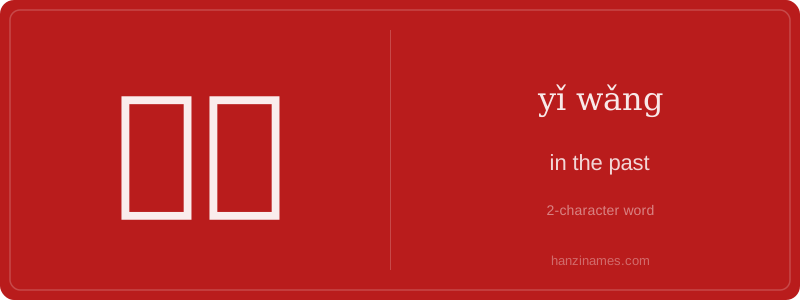
以往 means 'in the past' or 'previous times,' referring to events, conditions, or situations that have already occurred and are no longer current. It is often used to contrast with the present or to indicate a change over time.
The character 以 (yǐ) originally meant 'to use' or 'to take as a basis,' but in this context, it functions as a prefix indicating time or manner. 往 (wǎng) means 'to go' or 'past,' so together they form a term that signifies 'the time that has passed.'
以往 is commonly used in both spoken and written Chinese to refer to historical events, past experiences, or previous states of affairs. It appears frequently in news reports, academic writing, and everyday conversation when discussing changes or comparisons between past and present.