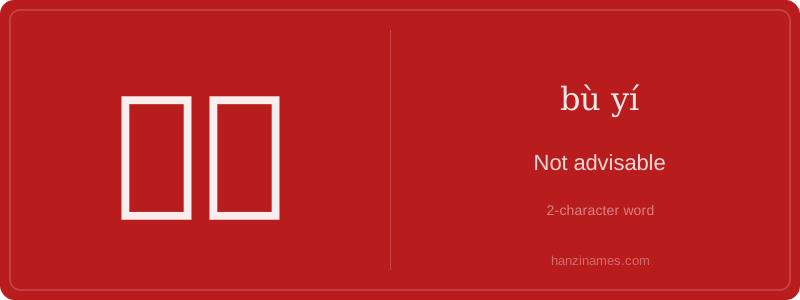
不宜
How to Say
👀 0
How to Write
Meaning: Not advisable
How to Understand
不宜
不宜 means 'not advisable' or 'not suitable.' It is used to express that something should not be done due to potential negative consequences or unsuitability.
The character 不 (bù) means 'not,' and 宜 (yí) means 'should' or 'suitable.' Together, they form a phrase indicating that an action is not recommended or appropriate.
不宜 is commonly used in formal or written contexts, such as in instructions, warnings, or advice. It is often seen in medical, legal, or instructional materials where caution is necessary. It can also appear in everyday conversations to politely advise against certain actions.
Example Sentences
这个药不宜与酒精一起服用。
This medicine should not be taken with alcohol.
这种场合不宜谈论私人话题。
This kind of topic is not suitable for discussion in this setting.