天堂
How to Understand
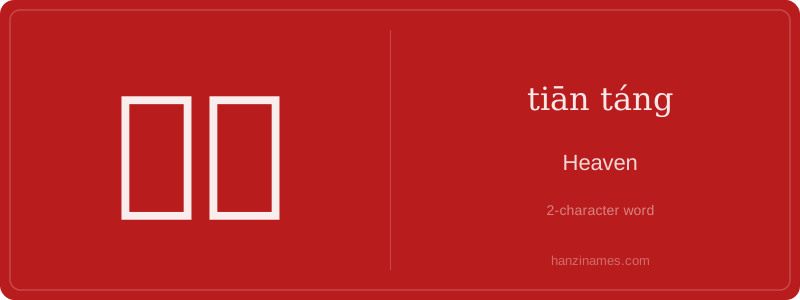
天堂 (tiān táng) is the Chinese word for 'heaven,' often referring to a paradise or an ideal place of happiness and peace. It can also be used metaphorically to describe a place that feels like paradise, such as a beautiful vacation spot or a blissful state of mind.
The character 天 (tiān) means 'sky' or 'heaven,' while 堂 (táng) means 'hall' or 'room.' Together, they form a term that literally translates to 'heavenly hall,' evoking a sense of divine or elevated space. This compound has roots in both religious and literary traditions.
In everyday use, 天堂 can refer to a literal afterlife or a metaphorical perfect place. It's commonly used in poetry, literature, and even modern media to express longing for an ideal environment. Understanding its cultural context helps learners grasp how it differs from similar terms like 天国 (tiānguó), which specifically refers to 'heavenly kingdom' in a religious sense.