纵然
How to Understand
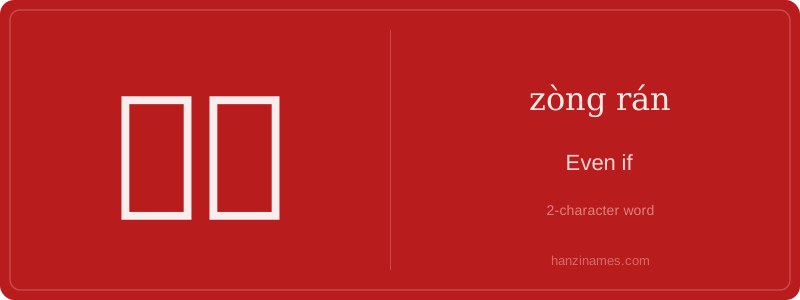
纵然 is a conjunction that means 'even if' or 'even though.' It introduces a condition or situation that is contrary to the main clause, often used to express a hypothetical or unexpected outcome.
The character 纵 (zòng) originally meant 'to let go' or 'to release,' and later came to mean 'even if' in a conditional sense. 然 (rán) is a common suffix used to indicate a state or condition, often meaning 'so' or 'thus.' Together, they form a phrase that emphasizes contrast or concession.
纵然 is commonly used in formal and literary contexts, as well as in spoken language, to introduce a contrasting idea. It is often paired with other conjunctions like 也 (yě) to form expressions like 纵然...也... (even if...also...). This structure is frequently seen in news articles, essays, and academic writing.