后代
How to Say
👀 0
How to Write
Meaning: descendant
How to Understand
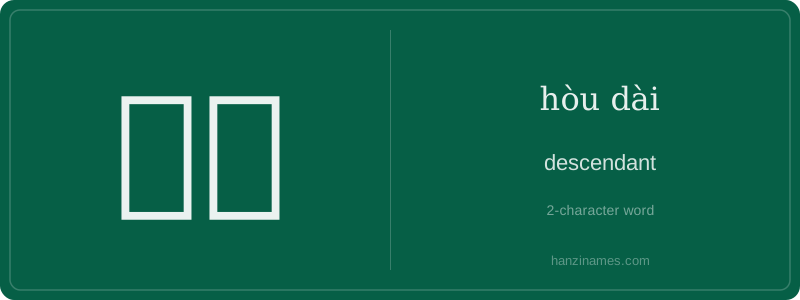
后代
后代 means 'descendant' or 'offspring,' referring to a person who comes after another in a family line. It emphasizes lineage and generational continuity, often used in the context of family history or heritage.
The character 后 (hòu) originally meant 'behind' or 'later,' and 代 (dài) means 'generation' or 'age.' Together, they convey the idea of a later generation or offspring, highlighting the connection between past and future generations.
后代 is commonly used in family contexts, historical discussions, or cultural narratives. It is also found in phrases like 历史的后代 (historical descendants), which refers to people who inherit the legacy of the past. In modern usage, it can also refer to the next generation in a broader social or cultural sense.
Example Sentences
他是我们家族的后代,继承了祖先的智慧。
He is a descendant of our family, inheriting the wisdom of his ancestors.
这个文化传统需要后代来传承。
This cultural tradition needs to be passed down by future generations.