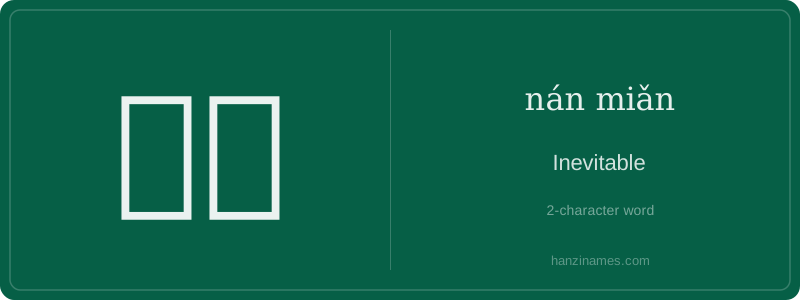
难免
How to Say
👀 0
How to Write
Meaning: Inevitable
How to Understand
难免
难免 means 'inevitable' or 'unavoidable.' It describes situations where something is bound to happen, often with a sense of resignation or acceptance.
The character 难 (nán) means 'difficult' or 'hard,' while 免 (miǎn) means 'to avoid' or 'to escape.' Together, they form a compound meaning 'cannot be avoided,' emphasizing the unavoidable nature of an outcome.
难免 is commonly used in both formal and informal contexts. For example, it can describe natural consequences, such as aging or mistakes, or social situations like conflicts. It is often paired with verbs or nouns to express that a result is certain, making it useful in discussions about cause and effect or human behavior.
Example Sentences
他犯了错误,难免会受到批评。
He made a mistake, which is inevitably going to result in criticism.
随着年龄增长,身体难免会有些毛病。
As people age, their bodies are inevitably prone to some health issues.