避开
How to Say
👀 0
How to Write
Meaning: avoid
How to Understand
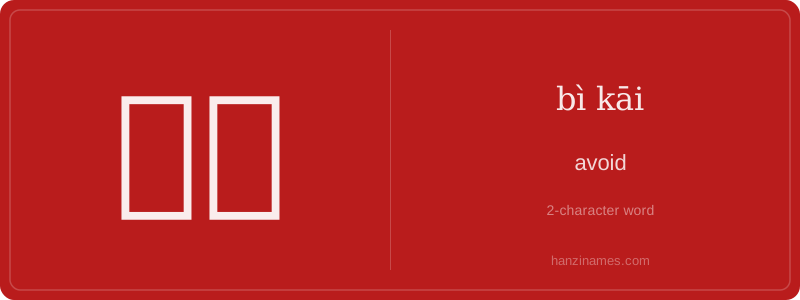
避开
避开 means 'to avoid' or 'to steer clear of' something, often to prevent danger, inconvenience, or unwanted interaction. It is commonly used in both literal and figurative contexts.
The character 避 (bì) originally meant 'to evade' or 'to escape,' while 开 (kāi) means 'to open' or 'to start.' Together, they convey the idea of 'opening a path away' from something, which aligns with the meaning of avoiding.
在日常生活中,避开 can be used in situations like avoiding crowds, dangers, or conflicts. It's also used metaphorically, such as avoiding sensitive topics in conversation. The phrase is widely used in both formal and informal settings.
Example Sentences
他为了避免交通堵塞,提前半小时出发了。
He left half an hour early to avoid traffic congestion.
她总是避开那些让她感到不舒服的人。
She always avoids people who make her uncomfortable.