不同于
How to Understand
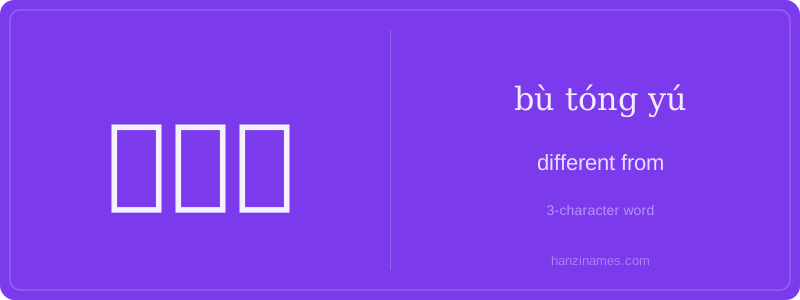
不同于 means 'different from' or 'unlike,' and is used to highlight a contrast between two things. It emphasizes that there is a distinction or difference in characteristics, qualities, or situations.
The character 不 (bù) means 'not,' 同 (tóng) means 'same,' and 于 (yú) functions as a preposition meaning 'from' or 'than.' Together, they form a phrase that explicitly contrasts one thing with another, often used in formal or written contexts.
不同于 is commonly used in academic, legal, or analytical writing to point out differences. It's also useful in daily conversations when comparing objects, ideas, or people. For example, it can be used in statements like 'This method is different from the previous one.' It's important to note that 于 here doesn't have an independent meaning but serves as a grammatical particle to link the comparison.