自有
How to Understand
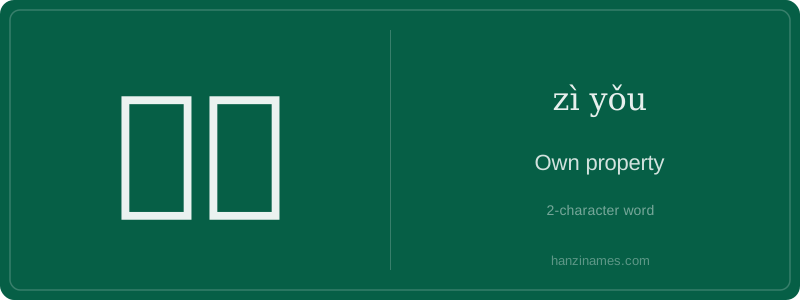
自有 means 'own property' or 'self-owned.' It refers to something that belongs exclusively to an individual or entity, emphasizing ownership and autonomy. Unlike terms like 'private,' which can imply secrecy, 自有 focuses on the right of possession and control.
The character 自 (zì) means 'self' or 'oneself,' while 有 (yǒu) means 'to have' or 'to possess.' Together, they form a compound that literally translates to 'self-have,' highlighting the idea of personal ownership or possession.
自有 is commonly used in legal, business, and personal contexts to describe assets, resources, or qualities that are exclusively one's own. It can also refer to self-reliance or independent capabilities, especially in modern Chinese discourse about personal development and economic independence.