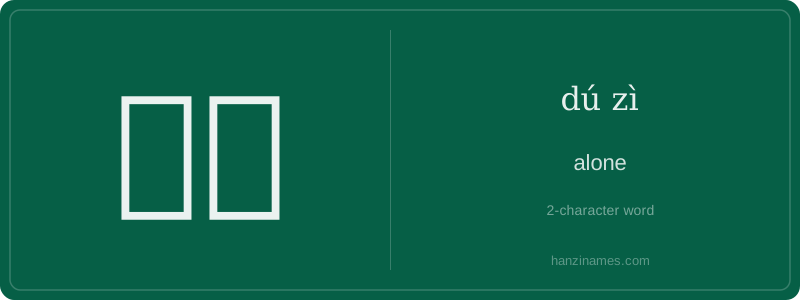
独自
How to Say
👀 0
How to Write
Meaning: alone
How to Understand
独自
独自 means 'alone' or 'by oneself,' emphasizing the state of being without others. It often conveys a sense of solitude or self-reliance, and is used to describe someone acting independently or in isolation.
The character 独 (dú) means 'alone' or 'only,' while 自 (zì) means 'self' or 'by oneself.' Together, they form a compound that literally translates to 'alone self,' reinforcing the idea of individuality or separation from others.
独自 is commonly used in everyday speech to describe situations where someone is by themselves, such as working alone, traveling alone, or making decisions independently. In Chinese culture, it can carry both positive and negative connotations, depending on context—representing independence or loneliness.
Example Sentences
他独自完成了这项任务。
He completed the task by himself.
她独自一人走在街上,思考着未来。
She walked alone on the street, thinking about the future.