叛乱
How to Understand
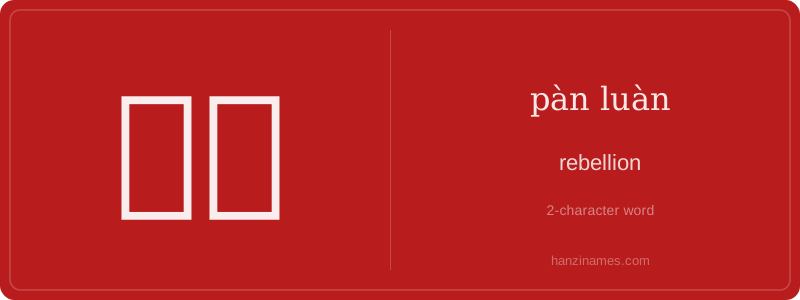
叛乱 (pàn luàn) refers to a rebellion or uprising, typically involving a group of people resisting authority, often in the context of political or military conflict. It is more specific than the general term 'revolt' and implies organized resistance against a governing body.
The character 叛 (pàn) originally meant 'to betray' or 'to rebel,' while 乱 (luàn) means 'disorder' or 'chaos.' Together, they convey the idea of an organized act of defiance that leads to societal disruption.
Rebellion is a common theme in Chinese history and literature, often depicted as a struggle for power or justice. In modern contexts, it may refer to internal conflicts or uprisings. The term is used in both historical and contemporary discussions about social unrest and political movements.