讽刺
How to Understand
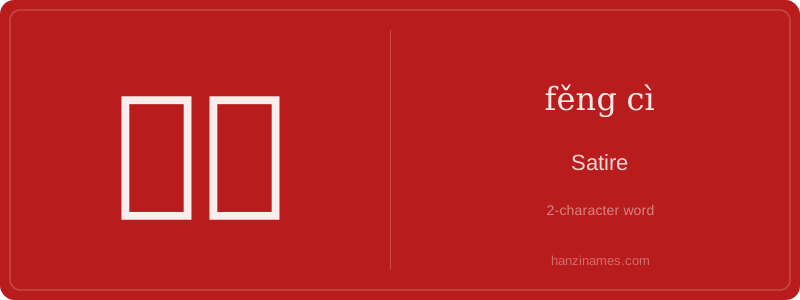
讽刺 refers to the use of humor, irony, or exaggeration to criticize or expose the flaws of individuals, groups, or society. It is often used in literature, media, and public discourse to highlight absurdities or inconsistencies in a subtle or indirect way.
The character 讽 (fěng) originally meant to mock or ridicule, while 刺 (cì) means to prick or sting. Together, they form a term that conveys a sharp, biting critique, suggesting a form of verbal attack that is both clever and pointed.
讽刺 is commonly used in Chinese literature and political commentary. It can be found in newspapers, books, and online discussions, often as a way to express critical views without direct confrontation. Understanding 讽刺 is essential for grasping the subtleties of Chinese cultural and political expression.