凌辱
How to Understand
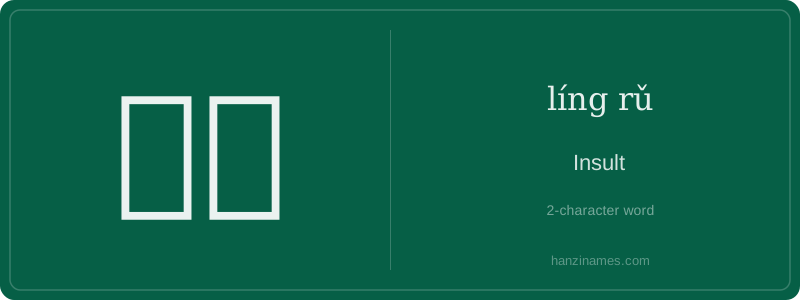
凌辱 means 'insult' or 'humiliation,' typically referring to the act of treating someone with disrespect or degradation, often in a public or severe manner. It emphasizes the emotional and psychological harm caused by such actions, distinguishing it from more general terms like 'offend' or 'mock.'
The character 凌 (líng) originally meant 'to rise above' or 'to trample,' and later came to mean 'to humiliate.' 辱 (rǔ) directly means 'disgrace' or 'shame.' Together, they form a compound that conveys the idea of deliberately causing someone to feel ashamed or degraded.
凌辱 is commonly used in contexts involving bullying, discrimination, or historical injustices. It is a strong term often found in literature, news, and formal discussions about social issues. Understanding its depth helps learners grasp the emotional weight behind certain expressions in Chinese culture.