妥协
How to Understand
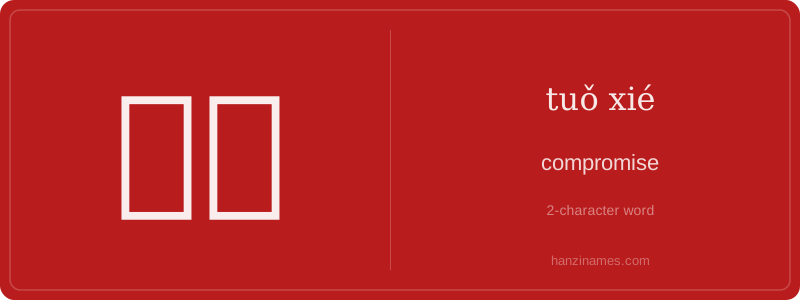
妥协 refers to a mutual agreement reached by two or more parties who have conflicting interests, often involving some level of concession. It implies a balance between opposing positions rather than a complete victory for one side.
The character 妥 (tuǒ) originally meant 'proper' or 'suitable,' and 协 (xié) means 'to coordinate' or 'to collaborate.' Together, they suggest a situation where different perspectives are balanced and aligned in a way that satisfies all involved parties.
Compromise is commonly used in political, business, and personal contexts. In Chinese culture, it is often seen as a sign of wisdom and maturity, reflecting the value placed on harmony and social stability. Related expressions include 不妥协 (bù tuǒxié), meaning 'uncompromising,' and 求同存异 (qiú tóng cún yì), which means 'seek common ground while reserving differences.'